
por volta de 1390
O documento mais antigo que se conhece da Ordem: um poema de 794 versos em inglês médio que expõe a história lendária da maçonaria e os quinze artigos e os quinze pontos que obrigavam o mestre e os companheiros. O manuscrito pertenceu à antiga Biblioteca Real da Inglaterra e encontra-se hoje na Biblioteca Britânica (Royal MS 17 A I).
Texto em inglês médio tal como o imprimiu H. J. Whymper em 1889, segundo a primeira edição de J. O. Halliwell de 1840.
Sobre este texto
O Poema Regius, chamado também Manuscrito Halliwell, é o documento mais antigo que se conhece da Franco-Maçonaria. O antiquário inglês James Orchard Halliwell identificou-o no acervo da antiga Biblioteca Real do Museu Britânico e publicou-o em 1840. É um poema em dísticos rimados, escrito em inglês médio. Conta como a geometria, que identifica com a maçonaria, foi ensinada por Euclides no Egito e levada à Inglaterra sob o rei Athelstan; expõe os quinze artigos para o mestre e os quinze pontos para os companheiros que, segundo se diz, uma assembleia de senhores e maçons redigiu; evoca os Quatro Coroados, as sete artes liberais e a torre de Babel; e termina com conselhos sobre a conduta na igreja e à mesa.
A tradução em português é a da Grande Loja do Cazaquistão, feita a partir do texto em inglês moderno.
O original em inglês médio
Tradução em português
Aqui começam as constituições da arte da geometria segundo Euclides.
Quem quiser ler e olhar com atenção poderá encontrar escrito num livro antigo que havia grandes senhores e também damas, os quais tinham muitos filhos juntos e, em verdade, não tinham renda com que os sustentar, nem na cidade, nem no campo, nem no bosque. Reuniram-se em conselho para decidir, por amor a esses filhos, como melhor poderiam conduzir a vida sem grande aflição, cuidado e discórdia, e sobretudo por causa da multidão de filhos que cresciam depois de gerados.
Mandaram então chamar grandes sábios para ensinar seus filhos nas boas obras, e rogaram-lhes, por amor de nosso Senhor, que organizassem alguma ocupação para seus filhos, a fim de que ganhassem com ela o seu sustento, tanto bem quanto honestamente, em plena segurança.
Naquele tempo, pela boa geometria, este honesto Ofício da boa maçonaria foi ordenado e instituído deste modo, forjado por esses sábios em conjunto. A pedido desses senhores, eles organizaram a geometria e deram-lhe o nome de maçonaria, pois é o mais honesto de todos os ofícios. Os filhos desses senhores tomaram-no a seu cargo, para aprender dele o Ofício da geometria, que ele havia composto com grande perícia. Pelos rogos dos pais e também das mães, ele os pôs a este honesto Ofício.
Aquele que melhor aprendesse, e fosse honesto, e superasse os companheiros em perícia, se os superasse nesse Ofício, devia ter mais honra do que o menor. O nome desse grande sábio era Euclides, e o seu nome se espalhou muito longe e por toda parte. Mas esse grande sábio ordenou ainda que aquele que estivesse mais alto neste grau devia ensinar o mais simples de entendimento nesse honesto Ofício, até que fosse perfeito, e assim cada um devia ensinar o outro e amarem-se uns aos outros como irmã e irmão.
Ordenou além disso que o mais honrado fosse chamado Mestre, e que os maçons nunca se chamassem entre si, dentro do Ofício, súdito nem servo, meu caro irmão, ainda que não seja tão perfeito como outro. Cada um chamará aos demais companheiro, por cortesia, porque descendem de nascimento gentil. Desta maneira, pelo bom entendimento da geometria, começou pela primeira vez o Ofício da maçonaria: o sábio Euclides o encontrou assim, este Ofício da geometria, na terra do Egito.
No Egito ele o ensinou longe e amplamente, e em muitas terras de todos os lados. Muitos anos depois, entendo eu, antes que o Ofício chegasse a esta terra, ele chegou à Inglaterra, como vos conto, nos dias do bom rei Athelstan. Este então edificou salões e aposentos, e templos altos de grande honra, para se recrear de dia e de noite, e para adorar o seu Deus com toda a sua força.
Este bom senhor amava muito este Ofício e resolveu fortalecê-lo em todas as suas partes, por causa das várias faltas que encontrava no Ofício. Mandou por toda a terra que todos os maçons do Ofício viessem a ele sem demora, para emendar todas essas faltas por bom conselho, se pudesse ser feito.
Fez então convocar uma assembleia de vários senhores, cada um no seu posto: duques, condes e barões, cavaleiros, escudeiros e muitos mais, e os grandes burgueses daquela cidade. Todos lá estavam, cada um no seu grau, para ordenar o estado desses maçons. Ali procuraram, com o seu entendimento, como poderiam governá-lo, e elaboraram quinze artigos e quinze pontos.
Aqui começa o primeiro artigo.
O primeiro artigo desta geometria: o mestre maçom deve ser firme, confiável e verdadeiro; jamais se arrependerá disso. Pagai aos vossos companheiros segundo o custo, pois bem sabeis quanto custam então os mantimentos; pagai-lhes com verdade, sob a vossa fé, o que puderem merecer; e não tomeis mais pelo vosso salário do que puderdes servir. Nem por amor nem por temor aceiteis suborno de uma parte ou de outra, de senhor ou de companheiro, seja quem for; não recebais dádiva deles. Mantende-vos reto como um juiz, e assim fareis justiça a ambos. Fazei isto com verdade aonde quer que vades, e a vossa honra e o vosso proveito serão maiores.
O segundo artigo.
O segundo artigo da boa maçonaria, como podeis aqui ouvir em particular: todo mestre que seja maçom deve comparecer à congregação geral, desde que lhe tenha sido dito com razoável antecedência onde a assembleia se há de realizar. Deve ir a essa assembleia, a menos que tenha escusa razoável, ou que seja desobediente ao Ofício, ou que o tenha surpreendido a falsidade, ou que a doença o tenha tomado de tal modo que não possa vir entre eles. Essa é boa e suficiente escusa para faltar à assembleia, sem uma palavra de fábula.
O terceiro artigo.
O terceiro artigo, em verdade, é que o mestre não tome aprendiz sem ter boa garantia de que o aprendiz permanecerá com ele sete anos, como vos digo, para aprender o seu Ofício, que é proveitoso. Em menos tempo ele não pode ser útil nem ao proveito do senhor nem ao seu próprio, como podeis saber por boa razão.
O quarto artigo.
O quarto artigo deve ser este: que o mestre tenha bom cuidado de não fazer de um servo da gleba seu aprendiz, nem o tomar por cobiça, pois o senhor a quem ele está ligado pode buscar o aprendiz onde quer que vá. Se ele fosse tomado na Loja, causaria muita perturbação, e poderia suceder tal caso que afligisse a alguns ou a todos, pois todos os maçons que ali estão manter-se-ão juntos. Se um tal homem viesse a morar nesse Ofício, poder-se-iam contar muitos transtornos. Para maior sossego, então, e por honra, tomai um aprendiz de grau mais alto. Acho escrito desde tempos antigos que o aprendiz deve ser de linhagem gentil, e assim por vezes o sangue de grandes senhores tomou a si esta geometria, o que é muito bom.
O quinto artigo.
O quinto artigo é muito bom: que o aprendiz seja de sangue legítimo. O mestre não deve, por vantagem alguma, tomar um aprendiz que seja deformado. Quer dizer, como podeis ouvir, que ele deve ter todos os membros inteiros. Seria grande vergonha para o Ofício fazer um homem coxo e aleijado, pois um homem imperfeito de tal sangue pouco bem faria ao Ofício. Assim todos podereis saber que o Ofício quer um homem forte. Um homem mutilado não tem força; podeis sabê-lo muito antes do anoitecer.
O sexto artigo.
O sexto artigo não deveis omitir: que o mestre não faça agravo ao senhor tomando do senhor, pelo seu aprendiz, tanto quanto os seus companheiros em tudo. Pois nesse Ofício eles são plenamente perfeitos, e ele não é, como podeis ver. Seria também contra a boa razão tomar o seu salário como os seus companheiros. Este mesmo artigo, neste caso, julga que o aprendiz tome menos do que os seus companheiros, que são plenamente perfeitos. Em várias matérias ele pode retribuí-lo: o mestre pode instruir de tal modo o seu aprendiz que o salário deste aumente depressa, e antes que chegue ao fim o seu prazo o seu salário possa ter melhorado muito.
O sétimo artigo.
O sétimo artigo, que agora aqui está, vos dirá a todos juntos: nenhum mestre deve, por favor ou temor, vestir ou alimentar um ladrão. Nunca dará abrigo a ladrões, nem a homem que tenha matado um homem, nem a qualquer um de má fama, para que não volva o Ofício em vergonha.
O oitavo artigo.
O oitavo artigo vos mostra que o mestre bem pode fazer isto: se tiver algum homem do Ofício que não seja tão perfeito como deve ser, pode mudá-lo logo e tomar em seu lugar um homem mais perfeito. Um tal homem, por descuido, poderia trazer pouca honra ao Ofício.
O nono artigo.
O nono artigo mostra muito bem que o mestre deve ser ao mesmo tempo sábio e forte; que não empreenda obra alguma a menos que possa tanto concluí-la como realizá-la; que seja também para o proveito do senhor e do seu Ofício, aonde quer que vá; e que o alicerce seja bem assentado, de modo que não ceda nem se rache.
O décimo artigo.
O décimo artigo deve ser conhecido entre o Ofício, por grandes e pequenos: nenhum mestre suplantará outro, mas estarão juntos como irmã e irmão neste curioso Ofício, todos e cada um, que pertence a um mestre maçom. Nem suplantará qualquer outro homem que tenha tomado uma obra a seu cargo, sob pena de uma multa tão forte que não pesa menos de dez libras, a menos que se descubra que aquele que primeiro tomou a obra é culpado. Pois nenhum homem na maçonaria suplantará outro, a menos que a obra seja de tal modo feita que dê em nada; então outro maçom poderá pedir essa obra, para salvá-la em proveito do senhor. Em tal caso, a não ser que assim suceda, nenhum maçom se meterá nela. Em verdade, aquele que começa o alicerce, se é bom e sólido maçom, tem certamente em mente levar a obra a um muito bom fim.
O décimo primeiro artigo.
O décimo primeiro artigo eu vos digo: é belo e livre, pois ensina, com toda a sua força, que nenhum maçom trabalhe de noite, a menos que seja para exercitar o seu entendimento, se com isso eu o pudesse melhorar.
O décimo segundo artigo.
O décimo segundo artigo é de alta honra para todo maçom, onde quer que esteja: não depreciará a obra do seu companheiro, se quer salvar a sua própria honra. Louvá-la-á com palavras honestas, pelo entendimento que Deus vos enviou, mas emendá-la-á com tudo o que puderdes, entre os dois, sem recusa.
O décimo terceiro artigo.
O décimo terceiro artigo, assim Deus me salve, é que, se o mestre tem um aprendiz, o ensine a fundo e lhe dê pontos medidos, para que conheça bem o Ofício, aonde quer que vá sob o sol.
O décimo quarto artigo.
O décimo quarto artigo, por boa razão, mostra ao mestre como deve proceder: não tomará aprendiz a menos que tenha várias obras a fazer, para que o aprendiz possa, dentro do seu prazo, aprender dele vários pontos.
O décimo quinto artigo.
O décimo quinto artigo põe termo, pois é amigo do mestre: ensinará ao aprendiz que por homem algum tome sobre si falso amparo, nem ampare os seus companheiros no seu pecado por qualquer ganho que possa obter, nem os deixe jurar falso juramento, por temor pelas suas almas, para que não volva o Ofício em vergonha e ele próprio em grande censura.
Mais constituições.
Nesta assembleia foram ordenados mais pontos por grandes senhores e também mestres: que todo aquele que quiser conhecer este Ofício e chegar a estado deve amar bem a Deus, e a Santa Igreja sempre, e também o seu mestre, com quem estiver, aonde quer que vá, no campo ou no bosque. E amai também os vossos companheiros, pois é isso o que o vosso Ofício vos manda fazer.
O segundo ponto.
O segundo ponto, como vos digo, é que o maçom trabalhe no dia de trabalho tão fielmente quanto puder ou lhe for possível, para merecer o seu salário do dia de festa, e labute fielmente na sua tarefa, a fim de merecer ter a sua recompensa.
O terceiro ponto.
O terceiro ponto deve ser observado em separado: que o aprendiz o conheça bem. Guardará e ocultará o conselho do seu mestre, e também o dos seus companheiros, com bom propósito. A homem algum dirá os segredos da câmara, nem o que quer que façam na Loja. O que quer que ouçais ou vejais que eles fazem, não o digais a homem algum, aonde quer que vades. O conselho dos salões e também dos aposentos, guardai-o bem, para grande honra, para que não vos volva em censura e não traga o Ofício a grande vergonha.
O quarto ponto.
O quarto ponto nos ensina também que nenhum homem seja falso ao seu Ofício. Não sustentará erro algum contra o Ofício, mas o deixará passar, nem fará agravo algum ao seu mestre ou aos seus companheiros. E ainda que o aprendiz esteja sob temor, contudo teria a mesma lei.
O quinto ponto.
O quinto ponto é, sem recusa, que, quando o maçom recebe o seu pagamento do mestre, tal como lhe foi ordenado, deve recebê-lo com muita mansidão. Contudo, o mestre, por boa razão, deve avisá-los legalmente antes do meio-dia, se não os quiser empregar mais, como fazia antes. Ninguém pode contender contra esta ordenação, se pensa prosperar.
O sexto ponto.
O sexto ponto é muito fácil de conhecer, para grandes e pequenos igualmente: poderia suceder entre os maçons tal caso, a alguns ou a todos, que por inveja ou ódio mortal surja muitas vezes grande discórdia. Então o maçom deve, se puder, convocar ambos para um dia; mas ainda não farão um dia de concórdia até que o dia de trabalho tenha passado de todo. No dia de festa bem podeis achar vagar bastante para fazer um dia de concórdia, para que a contenda não estorve a sua obra no dia de trabalho. Que sejam conduzidos a tal fim que fiquem bem na lei de Deus.
O sétimo ponto.
O sétimo ponto bem pode significar, da longa vida que Deus nos empreste, como claramente descreve: não vos deitareis com a mulher do vosso mestre, nem com a do vosso companheiro, de maneira alguma, para que o Ofício não vos despreze; nem com a concubina do vosso companheiro, tanto quanto não quereríeis que ele o fizesse com a vossa. Seja a pena certa: servirá de aprendiz sete anos de novo. Se ofender em qualquer destes pontos, deve ser castigado conforme. Muita dor poderia começar de tão torpe e mortal pecado.
O oitavo ponto.
O oitavo ponto, podeis estar certo: se tomastes algum encargo, sede leal ao vosso mestre, e nunca vos arrependereis desse ponto. Deveis ser, por necessidade, um verdadeiro mediador entre o vosso mestre e os vossos companheiros. Fazei com verdade tudo o que puderdes a ambas as partes, e isso é bom direito.
O nono ponto.
O nono ponto assim o chamaremos: que ele seja despenseiro do nosso salão. Se estais juntos numa câmara, sirva cada um ao outro com semblante brando. Gentis companheiros, deveis saber que todos haveis de ser despenseiros por turno, semana após semana sem dúvida, todos vós, servindo-vos uns aos outros com amor como irmã e irmão. Ninguém se eximirá à custa de outro para alguma vantagem; mas todo homem será igualmente livre nessa despesa, assim deve ser.
Cuidai que sempre pagueis bem a cada homem por qualquer mantimento que tenhais comprado, para que não se faça cobrança a vós, nem aos vossos companheiros, em grau algum, seja de homem ou de mulher. Pagai-lhes bem e com verdade, pois é isso o que queremos. Tomai de vosso companheiro um verdadeiro recibo disto, pelo bom pagamento que fizerdes, para que não envergonhe o vosso companheiro e vos traga a vós mesmo grande censura. O despenseiro deve também dar boa conta dos bens que tomou, dos bens dos vossos companheiros que gastastes, onde, e como, e com que fim. Deveis chegar a tais contas quando os vossos companheiros o quiserem.
O décimo ponto.
O décimo ponto expõe uma boa vida, para viver sem cuidado e discórdia. Pois se o maçom vive mal e é falso na sua obra, e por tal falsa desculpa calunia os seus companheiros sem razão, pela falsa calúnia de tal relato poderá fazer que todo o Ofício seja censurado. Se ele faz ao Ofício tal vilania, não lhe mostreis favor, certamente, nem o ampareis em vida perversa, para que não volva em cuidado e discórdia. Contudo não demorareis com ele, mas o obrigareis a comparecer onde quiserdes, onde quiserdes, em voz alta ou em voz baixa. Citá-lo-eis para a próxima assembleia, para comparecer diante de todos os seus companheiros, e a menos que queira comparecer diante deles deve renegar o Ofício. Será então castigado segundo a lei que foi fundada nos dias antigos.
O décimo primeiro ponto.
O décimo primeiro ponto é de boa discrição, como podeis saber por boa razão. Um maçom, se conhece bem este Ofício, que vê o seu companheiro talhando uma pedra e prestes a estragá-la, deve emendá-la logo, se puder, e ensinar-lhe como emendá-la, para que a obra do senhor não se perca. Ensinai-lhe com brandura a emendá-la, com belas palavras que Deus vos emprestou. Por amor d'Aquele que está acima, nutri o amor com doces palavras.
O décimo segundo ponto.
O décimo segundo ponto é de grande realeza: onde a assembleia se há de realizar haverá mestres e companheiros também, e muitos outros grandes senhores. Lá estará o xerife daquele condado e também o prefeito daquela cidade, cavaleiros e escudeiros lá estarão, e outros vereadores, como vereis. Qualquer ordenança que ali façam, manterão em conjunto contra aquele homem, seja quem for, que pertença ao Ofício, belo e livre. Se ele fizer qualquer contenda contra eles, será tomado sob a sua custódia.
O décimo terceiro ponto.
O décimo terceiro ponto nos é muito caro: jurará nunca ser ladrão, nem socorrer ladrão no seu falso ofício, por quaisquer bens que tenha tomado, se o puderdes saber ou ver, nem pelos seus bens nem pelos seus parentes.
O décimo quarto ponto.
O décimo quarto ponto é uma muito boa lei para aquele que estaria sob temor: deve jurar ali um bom e verdadeiro juramento ao seu mestre e aos seus companheiros que ali estão. Deve ser firme e verdadeiro para toda esta ordenança, aonde quer que vá, e para o seu senhor soberano, o rei, para lhe ser leal acima de todas as coisas. E a todos estes pontos anteriores deveis necessariamente estar jurados, e todos os maçons, queiram ou não, jurarão o mesmo juramento a todos estes pontos, que foram ordenados por muito boa doutrina. E cada homem indagará, por sua parte, tão bem quanto puder, se algum homem pode ser achado culpado em qualquer destes pontos em particular; e seja quem for, que seja procurado e trazido à assembleia.
O décimo quinto ponto.
O décimo quinto ponto é de muito boa doutrina para aqueles que ali serão jurados. Tal ordenança foi estabelecida na assembleia pelos grandes senhores e mestres acima referidos, para aqueles que são desobedientes contra a ordenança que existe, destes artigos que ali foram movidos por grandes senhores e maçons todos juntos. E se forem abertamente provados diante dessa assembleia, um por um, e não quiserem reparar a sua culpa, então devem necessariamente abandonar o Ofício; renunciarão ao Ofício dos maçons e jurarão nunca mais o exercer.
Mas se quiserem reparar, nunca mais serão recebidos no Ofício. E se não o quiserem fazer, o xerife logo virá a eles e lançará os seus corpos em profundo cárcere pela transgressão que cometeram, e tomará os seus bens e o seu gado para a mão do rei, cada um por inteiro, e os deixará ali muito quietos até que seja a vontade do nosso senhor soberano, o rei.
Outra ordenança da arte da geometria.
Ordenaram que se realizasse uma assembleia todos os anos, onde quisessem, para emendar as faltas, se alguma se achasse entre o Ofício dentro da terra. Realizar-se-ia todos os anos ou de três em três anos, em qualquer lugar que quisessem. Tempo e lugar devem também ser ordenados, em que lugar se deveriam reunir. Todos os homens do Ofício devem lá estar, e outros grandes senhores, como podeis ver, para reparar as faltas de que ali se falar, se algum deles tiver quebrado as regras.
Todos os que pertencem à doutrina deste Ofício serão ali jurados para guardar estes estatutos, todos eles, que foram ordenados pelo rei Athelstan. Diz o rei: "Estes estatutos que aqui encontrei, quero que sejam guardados por toda a minha terra, para honra da minha realeza, que tenho pela minha dignidade." Também em cada assembleia que realizardes, vireis ao vosso rei soberano, com ousadia, rogando-lhe da sua alta graça que esteja convosco em todo lugar, para confirmar os estatutos do rei Athelstan, que ele ordenou para este Ofício por boa razão.
A arte dos Quatro Coroados.
Rezemos agora a Deus todo-poderoso, e à sua mãe Maria resplandecente, para que possamos guardar estes artigos aqui, e estes pontos, bem todos juntos, como fizeram estes quatro santos mártires que foram de grande honra neste Ofício. Eram tão bons maçons como jamais andaram sobre a terra; eram também gravadores e fazedores de imagens. Pois eram obreiros dos melhores, e o imperador tinha grande desejo deles. Queria que lhe fizessem uma imagem que pudesse ser adorada por amor dele; tais ídolos ele tinha no seu tempo, para desviar o povo da lei de Cristo.
Mas eles eram firmes na lei de Cristo, e no seu Ofício, sem recusa. Amavam bem a Deus e todo o seu ensinamento, e estavam sempre no seu serviço. Eram homens verdadeiros naquele dia e viviam bem na lei de Deus. Não queriam pensar em fazer ídolos, por ganho algum que pudessem tomar, para crer nesses ídolos como no seu Deus; não o fariam ainda que ele enlouquecesse. Pois não queriam renegar a sua verdadeira fé e crer na sua falsa lei. O imperador mandou prendê-los logo e lançá-los em profundo cárcere. Quanto mais duramente os castigava naquele lugar, tanto mais alegria tinham da graça de Cristo.
Então, quando não viu outro meio, enviou-os à morte. Quem quiser saber mais da sua vida poderá achá-la no livro, na lenda dos santos, sob o nome de Quatuor Coronati, os Quatro Coroados. A sua festa, sem recusa, será no oitavo dia depois de Todos os Santos.
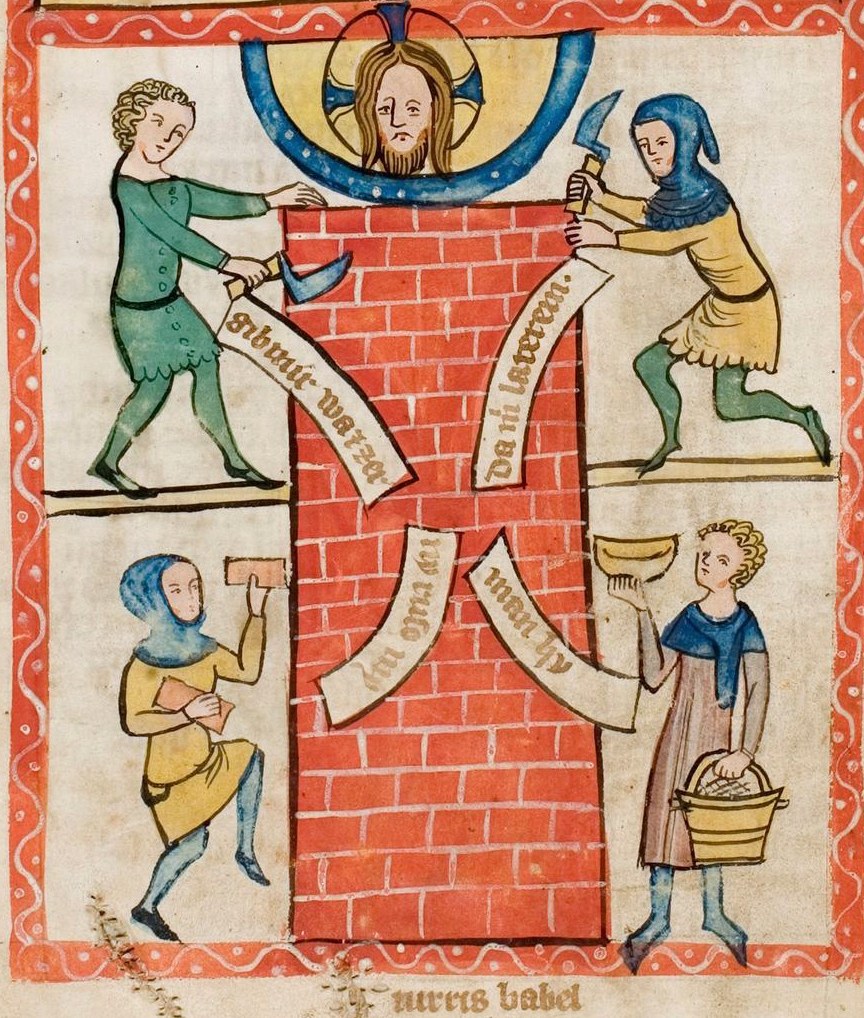
Podeis ouvir, como leio, que muitos anos depois, por grande pavor de que o dilúvio de Noé tivesse corrido todo, foi começada a Torre de Babilônia, tão clara obra de cal e pedra como qualquer homem deveria contemplar. Foi começada tão longa e larga que a sua altura, de sete milhas, fazia sombra ao sol. O rei Nabucodonosor a mandou fazer, com grande firmeza, por amor dos homens, para que, se tal dilúvio viesse de novo, não passasse por cima da obra. Mas porque tiveram tão alto orgulho, com forte jactância, toda aquela obra se perdeu. Um anjo os feriu com várias línguas, de modo que nunca um soube o que outro devia dizer.
Muitos anos depois, o bom sábio Euclides ensinou muito amplamente o Ofício da geometria, como fazia então com muitos outros ofícios além deste. Pela alta graça de Cristo no céu começou com as sete ciências. A gramática é a primeira ciência, na verdade; a dialética a segunda, assim eu tenha bem-aventurança; a retórica a terceira, sem negação; a música é a quarta, como vos digo; a astronomia a quinta, pelo meu focinho; a aritmética a sexta, sem dúvida; a geometria a sétima põe termo, pois é ao mesmo tempo humilde e cortês. A gramática, em verdade, é a raiz, para quem quiser aprender pelo livro;
mas a arte a excede no seu grau, como o fruto excede a raiz da árvore. A retórica mede com fala ornada, e a música é um doce canto; a astronomia enumera, meu caro irmão; a aritmética mostra que uma coisa é outra; a geometria é a sétima ciência, que sabe separar a falsidade da verdade, na verdade. Estas são as sete ciências; quem bem as usar poderá ter o céu.
Agora, caros filhos, pelo vosso entendimento, deixai o orgulho e a cobiça, e atentai na boa discrição e nas boas maneiras, aonde quer que chegueis. Agora vos rogo que presteis boa atenção, pois isto deveis necessariamente saber, mas deveis saber muito mais do que achais escrito aqui. Se o entendimento vos falta nisto, rogai a Deus que vo-lo envie. Pois o próprio Cristo nos ensina que a Santa Igreja é a casa de Deus, feita para nada mais senão para orar, como o livro nos diz; ali o povo se reunirá para orar e chorar o seu pecado.
Cuidai de não chegar tarde à igreja, para falar baixezas junto à porta. Quando fordes à igreja, tende sempre em mente adorar o vosso Senhor Deus de dia e de noite, com todo o vosso entendimento e também com toda a vossa força. Quando chegardes à porta da igreja, tomai um pouco daquela água benta que ali há, pois cada gota que ali sentirdes extingue um pecado venial, estai certo disso. Mas primeiro deveis tirar o capuz, por amor d'Aquele que morreu na cruz.
Quando entrardes na igreja, elevai logo o vosso coração a Cristo. Olhai então para a cruz e ajoelhai-vos bem sobre ambos os joelhos. Então rogai-lhe que obre aqui segundo a lei da Santa Igreja, para guardar os dez mandamentos que Deus deu a todos os homens; e rogai-lhe com voz branda que vos guarde dos sete pecados, para que aqui, na vossa vida, vos guardeis bem de cuidado e discórdia. Além disso, conceda-vos a graça de ter um lugar na bem-aventurança do céu.
Na santa igreja deixai as palavras ociosas, a fala grosseira e os gracejos torpes, e afastai toda vaidade, e dizei o vosso Pater Noster e a vossa Ave. Cuidai também de não fazer ruído, mas estai sempre na vossa oração. Se vós mesmo não quereis orar, não estorveis outro homem de maneira alguma. Naquele lugar nem vos sentais nem fiqueis de pé, mas ajoelhai-vos bem no chão. Quando o Evangelho for lido, levantai-vos bem, afastando-vos da parede, e benzei-vos bem, se sabeis como, quando se começar o Gloria tibi. Quando o Evangelho estiver terminado, podeis ajoelhar-vos de novo; caí sobre ambos os joelhos por amor d'Aquele que a todos nós comprou.
Quando ouvirdes soar o sino por aquele santo sacramento, deveis ajoelhar-vos, tanto jovens como velhos, e erguer ambas as mãos, e então dizer desta maneira, bem e baixinho, sem ruído: "Senhor Jesus, sede bem-vindo, na forma de pão, como vos vejo. Agora, Jesus, pelo vosso santo nome, protegei-me do pecado e da vergonha; concedei-me confissão e comunhão antes que eu parta daqui, e verdadeira contrição pelo meu pecado, para que eu nunca, Senhor, morra nele; e assim como nascestes de uma virgem, nunca permitais que eu me perca; mas quando eu partir daqui, concedei-me bem-aventurança sem fim. Amém! Amém! Assim seja! Agora, doce Senhora, rogai por mim." Assim podeis dizer, ou outra coisa, quando vos ajoelhardes ao sacramento.
Por cobiça de bens, nada poupeis em adorar aquele que tudo fez; pois um homem pode alegrar-se naquele dia em que uma vez no dia o puder ver. Vale tanto, sem negação, que nenhum homem pode dizer a sua virtude; mas tanto bem faz essa visão, como santo Agostinho diz com toda a razão, que no dia em que virdes o corpo de Deus tereis estas coisas, com toda a certeza: comida e bebida na vossa necessidade, nenhuma naquele dia vos faltará; juramentos ociosos e palavras ociosas, Deus também vos perdoa; morte súbita naquele mesmo dia não precisais temer de maneira alguma; também naquele dia, vo-lo prometo, não perdereis a vista; e cada passo que derdes então para ver aquela santa visão será contado a vosso favor quando tiverdes grande necessidade dele; esse mensageiro, o anjo Gabriel, vo-los guardará muito bem.
Desta matéria agora posso passar, para dizer mais recompensas da missa: vinde à igreja com sossego, se puderdes, e ouvi a vossa missa todos os dias. Se não puderdes vir à igreja, onde quer que estejais trabalhando, quando ouvirdes dobrar o sino da missa, rogai a Deus com coração quieto que vos dê parte naquele serviço que eles celebram na igreja.
Além disso, vou pregar-vos, para que ensineis aos vossos companheiros: quando vierdes diante de um senhor, no salão, no aposento ou à mesa, tirai o capuz ou o barrete antes de vos chegardes a ele. Duas ou três vezes, sem dúvida, deveis inclinar-vos a esse senhor; faça-se com o joelho direito, e assim salvareis a vossa própria honra. Mantende o barrete e o capuz tirados até que tenhais licença para os pôr. Durante todo o tempo que falardes com ele, trazei o queixo erguido, belo e amável; assim, segundo o livro de bom trato, olhai-o amavelmente no rosto. Mantende o pé e a mão muito quietos, sem coçar nem tropeçar, como é razoável; guardai-vos também de cuspir e de fungar, e deixai isso para lugar reservado. E se sois sábio e forte, tendes grande necessidade de vos governar bem.
Quando entrardes no salão, entre gente gentil, boa e cortês, não presumais alto demais por coisa alguma, por causa do vosso alto sangue ou da vossa astúcia, nem para sentar nem para encostar: isso é bom e limpo trato. Não deixeis que o vosso semblante decaia por isso; em verdade, o bom trato salvará o vosso estado. Sejam quem forem o vosso pai e a vossa mãe, bem está a criança que pode prosperar, no salão ou na câmara, aonde quer que vades; boas maneiras fazem o homem. Olhai com prudência para o grau seguinte, para lhes fazer reverência por sua vez; não lhes façais reverência toda em fileira, a menos que os conheçais.
Quando estiverdes sentado à refeição, comei com decoro e honestidade. Primeiro cuidai que as vossas mãos estejam limpas e que a vossa faca seja afiada e aguda, e cortai o vosso pão à refeição tal como se possa comer ali. Se vos sentardes junto de homem mais digno do que vós, deixai que ele toque primeiro na carne antes que a ela estendais a mão. Não deveis lançar-vos sobre o melhor bocado, ainda que o aprecieis bem. Mantende as mãos belas e bem, sem sujar torpemente a toalha; não assoareis nela o nariz, nem limpareis o dente à refeição. Não mergulheis fundo demais no copo, ainda que tenhais boa vontade de beber, para que os vossos olhos não lacrimejem por isso, pois isso não seria cortesia. Cuidai que não haja carne na vossa boca quando começardes a beber ou a falar. Quando virdes algum homem bebendo que está a ouvir a vossa conversa, parai logo o vosso relato, quer beba vinho quer cerveja.
Cuidai também de não desdenhar de homem algum, em qualquer grau que o vejais andar; nem depreciareis homem algum, se quereis salvar a vossa honra. Pois tal palavra poderia escapar que vos faria ficar em mau repouso. Fechai a mão em punho e guardai-vos bem do "se eu soubesse". Na câmara entre as damas resplandecentes, guardai a língua e usai a vista. Não rieis com grande grito, nem façais desvarios com obscenidades. Brincai somente com os vossos pares, nem conteis tudo o que ouvis. Não reveleis a vossa própria ação, por folguedo algum ou recompensa alguma; com bela fala podeis ter a vossa vontade, e com ela podeis estragar-vos a vós mesmo. Quando encontrardes homem digno, não conserveis o barrete e o capuz; na igreja, no mercado ou no portão, fazei-lhe reverência segundo o seu estado.
Se andardes com homem mais digno do que vós, deixai que o vosso ombro dianteiro siga as costas dele, pois isso é trato sem falta. Quando ele falar, ficai quieto; quando ele tiver acabado, dizei o que quiserdes. Sede cuidadoso no vosso falar, e considerai bem o que dizeis; mas não lhe roubeis o relato, seja ao vinho seja à cerveja. Que Cristo então, da sua alta graça, vos dê a ambos entendimento e vagar para conhecer e ler bem este livro, e para ter o céu por recompensa. Amém! Amém! Assim seja! Digamo-lo todos assim, por caridade.